Why Copper Pipes Leak in Aliante Area Homes
Most hidden leaks in the Aliante area trace back to a predictable set of causes tied to the age and material of the housing stock. Aliante homes were built primarily between 2000 and 2008, and the copper supply lines installed during that period are now 17 to 25 years old. At this age, with Las Vegas Valley hard water in play, these pipes are entering the first major service cycle. Understanding what causes leaks in Aliante homes helps explain why detection is worth doing carefully. For an overview of our broader leak detection and repair services, visit our leak detection and repair services page.
Hard Water Mineral Corrosion in First-Service-Cycle Copper
The Las Vegas Valley receives municipal water from Lake Mead at 17 to 24 grains per gallon (approximately 280 parts per million), placing it among the hardest municipal water supplies in the United States. Over time, mineral buildup inside copper pipe walls accelerates interior corrosion. For Aliante homes now in the 17 to 25 year range, this sustained hard water exposure thins pipe walls gradually, creating conditions for pinhole leaks and supply line failures that are not visible from the surface.
Pinhole Leaks as an Early Warning Signal
Pinhole leaks are small but significant. A single pinhole leak in a copper supply line running beneath a slab or inside a wall may not produce obvious water staining right away, but it can cause ongoing damage to insulation, framing, and foundation materials before any visible sign appears. In Aliante homes, where the copper plumbing is reaching a predictable age-related thinning threshold, a pinhole leak is often the first sign that the surrounding pipe section has been degraded by hard water corrosion and deserves professional assessment.
Caliche Soil Movement and Slab Foundation Stress
The Aliante area sits on caliche and expansive soil common throughout the Las Vegas Valley. Caliche hardens and contracts with temperature and moisture changes, and the soil beneath slab foundations in North Las Vegas shifts seasonally. This movement stresses pipes running beneath and through concrete slab foundations, contributing to micro-fractures and fitting stress over years of repeated ground movement.
Closed-Loop Pressure and Thermal Expansion
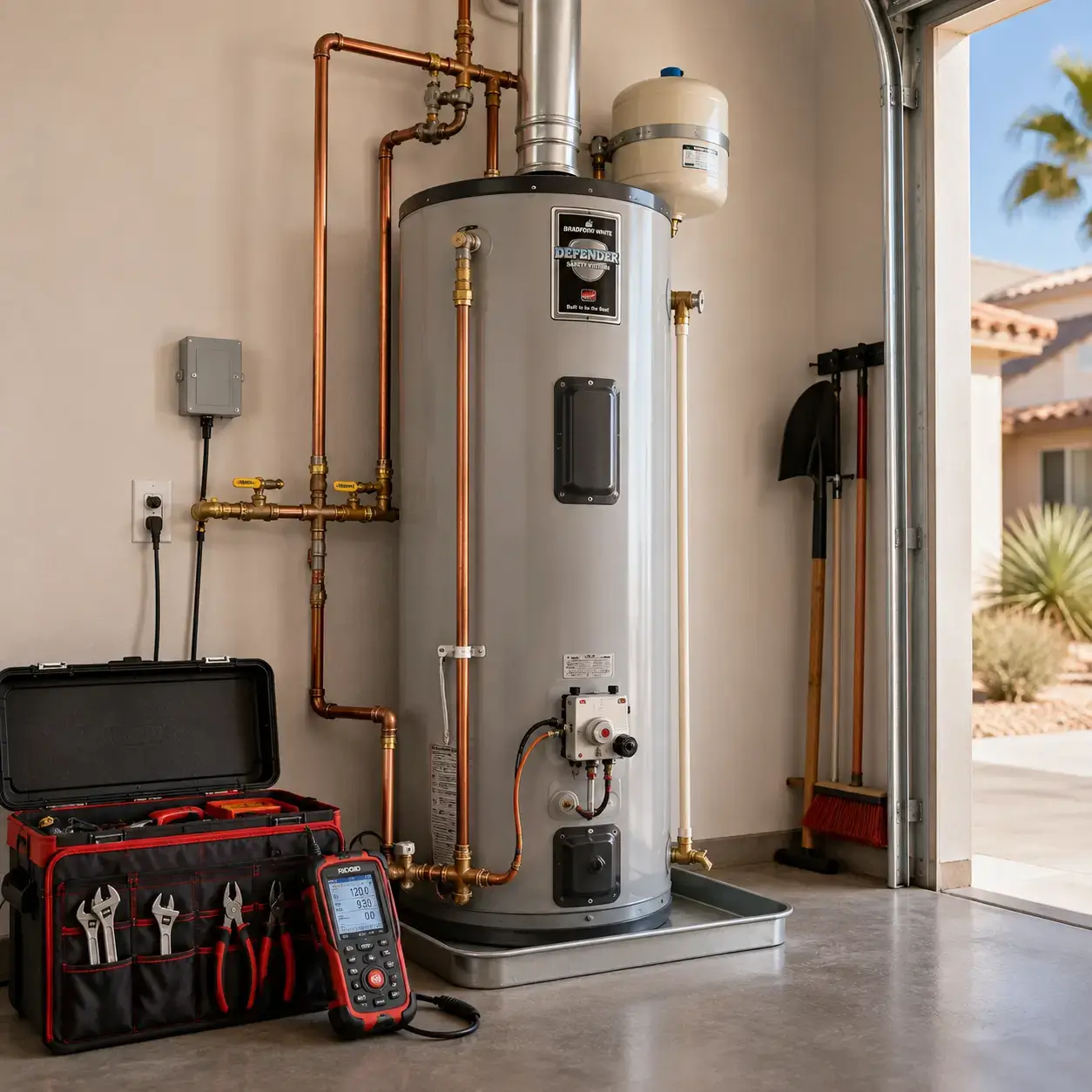
Most Aliante homes operate on closed-loop plumbing systems due to backflow preventers installed at the street meter. In a closed-loop system, thermal expansion from the water heater has nowhere to go when the water heater heats a tank. Without a thermal expansion tank in place, repeated pressure spikes cycle through the supply system each time the water heater fires. Over 17 to 25 years, this cumulative pressure stress contributes to fitting fatigue and pipe wall weakening.